
Knowledge · Lipedema diagnosis Lipedema on the abdomen? What is really behind it.
Whether lipedema can affect the abdomen is seen differently. The German S2k guideline describes lipedema as a symmetrical, painful fat distribution disorder of the limbs – the legs and arms – with the trunk not affected. In our clinical experience at Dr. LYPO, however, lipedema can also occur on the abdomen, the back, the neck and the face. Not every larger abdomen is lipedema: weight gain is often behind it.
If you have symptoms in your legs or arms and have also gained weight around your abdomen, it helps to look at the differences.
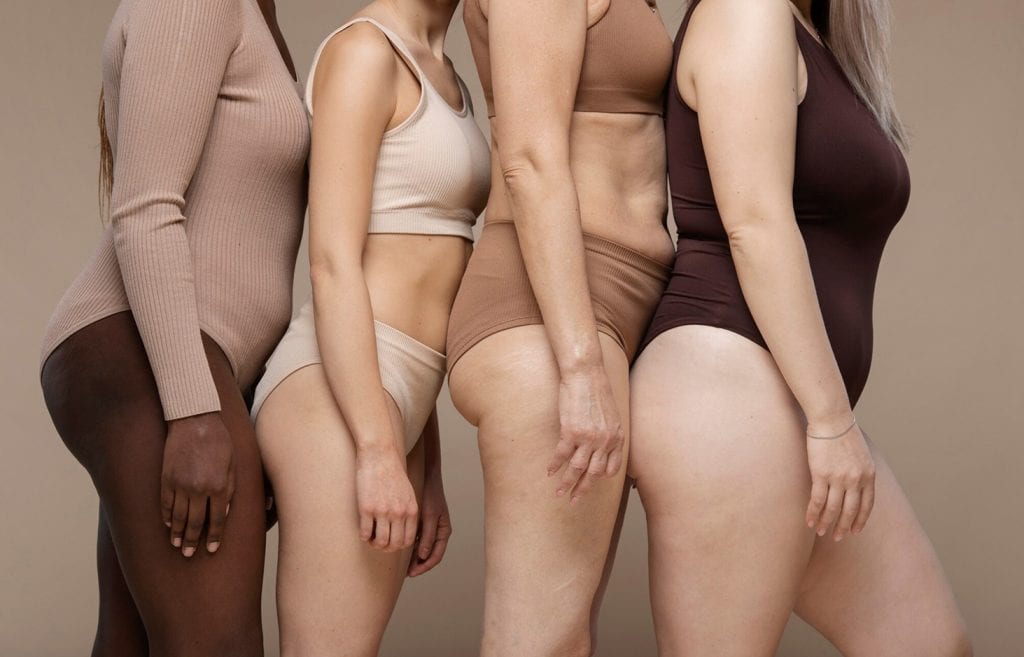
- According to the guideline
- Legs and arms, hands and feet spared
- Clinical experience at Dr. LYPO
- Also abdomen, back, neck, face
- Abdominal fat
- Usually weight gain or excess skin
- Clarity
- Medical examination
Is there lipedema on the abdomen?
According to the German S2k guideline, no: it describes lipedema on the hips, thighs and lower legs and on the shoulder region, upper arms and forearms; head, neck and trunk are considered unaffected. In our clinical experience, however, lipedema can also occur on the abdomen, the back, the neck and the face. Hands and feet are spared.
Typical is the disproportion between the limbs and the trunk: according to the guideline, lipedema is disproportionate, symmetrical and painful.
Why do I have a larger abdomen despite lipedema?
There are two possible reasons: in our clinical experience, lipedema itself can affect the abdomen. Often, however, excess weight is also present – according to the guideline, many affected women are overweight or obese and only a minority are of normal weight. An examination clarifies which applies to you.
Other reasons for a protruding abdomen
The abdomen can also protrude regardless of weight – after pregnancies, for example, because the straight abdominal muscles have separated (diastasis recti) or because of excess skin, and likewise after major weight loss.
If your abdominal girth increases suddenly or for no apparent reason, this should be checked by a doctor.
How do I tell the difference between lipedema and abdominal fat?
Lipedema fat is distributed symmetrically, is tender to pressure and spares the hands and feet; a disproportion, for example between the legs and upper body, is typical. Fat from general weight gain, by contrast, is distributed proportionally and is usually not painful.
- Lipedema: increased fat on the legs and/or arms, equal on both sides
- Lipedema: pain or tenderness in the affected areas
- Lipedema: hands and feet stay slim
- Weight gain: fat increases throughout the body, including the trunk
Both conditions can exist at the same time. They can only be told apart reliably through a consultation and physical examination; the lipedema self-test offers initial guidance.
And if it does not hurt: lipedema or lipohypertrophy?
According to the guideline, lipedema is always painful. A painless, disproportionate and symmetrical fat distribution disorder is called lipohypertrophy.
Telling them apart is not always easy and belongs in medical hands. It matters for treatment because the guideline expressly applies to painful lipedema.
Do experts agree on this?
No. The German S2k guideline limits lipedema to the limbs. Some international sources, by contrast, also describe fatty tissue on the lower trunk in connection with lipedema, and our clinical experience also shows lipedema tissue on the abdomen, back, neck and face.
What matters in an individual case is the clinical finding: mention changes on your abdomen openly during the examination so that cause and suitable treatment can be clarified.
Can abdominal fat be treated alongside lipedema?
Yes. Which treatment fits depends on the cause: lipedema tissue, general excess weight or excess skin. Options include liposuction or – with excess skin – a tummy tuck. An examination clarifies what makes sense.
If obesity is also present, the guideline lists treating it first as a point to consider before liposuction.